Nonn Melinda
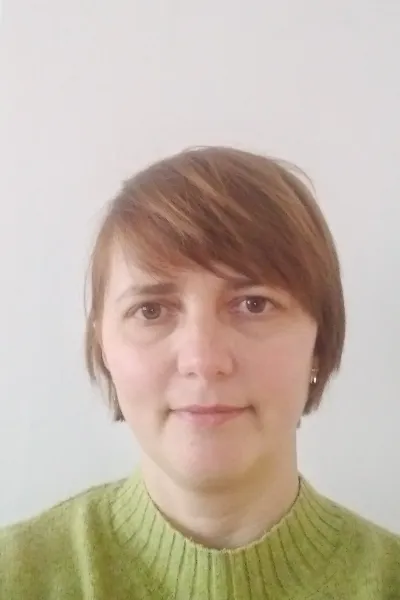
Melinda Nonn earned a degree in chemistry in Cluj-Napoca in 2007, after which she began her PhD studies at the Faculty of Pharmacy at the University of Szeged, completing it in 2013. In 2011, she began working as a research assistant at the Institute of Medical Chemistry at the University of Szeged. In addition to her research work, she participated in teaching organic and analytical chemistry to pharmacy students. Her main research area is the synthesis of cyclic beta-amino acid derivatives with diverse functional groups. Starting in the spring of 2022, she continued her work in the same research area at the Institute of Materials and Environmental Chemistry of the HUN-REN Research Centre for Natural Sciences.
She has received the following awards and grants:
• 2013 – Pál Erdős Young Researcher Grant in Convergence Regions
• 2020–2025 FK OTKA FK134586, New-generation functionalized beta-amino acid derivatives; selective synthesis methods and applications
• 2021 – Young Researcher of the Year Certificate of Recognition – University of Szeged
• 2023 – János Bolyai Research Scholarship
She has been working as a data steward at HUN-REN TTK since February 2026.
As the data steward at HUN-REN TTK, her role is to support the institution’s researchers in preparing data management plans and to provide guidance on the proper handling of research data. In addition, she helps create the necessary conditions—such as the use of ORCID identifiers and the publication of research data in appropriate repositories—that contribute to greater international visibility for researchers and their research results.
"It depends on the field of science, but overall, it can be said that a vast amount of data is generated today for any given research topic. Ten years ago, the expectations placed on researchers regarding the sharing and making visible of the data they generated were completely different. As a data steward, perhaps the biggest challenge for me is encouraging and motivating researchers to manage their research data responsibly, as well as supporting them in publishing their data in accordance with the FAIR principles. This can contribute to greater visibility for their research and increase the number of citations. It feels good when they come to me with questions or for advice, and I’m able to help them.”