A key element of ARP’s development vision is semantic-level data packaging and management with RO-Crate, which has become one of the most widely accepted research data packaging standards. RO-Crate is increasingly used in research data workflow engines, ELNs (Electronic Lab Notebooks), and numerous EOSC services.
The ARP’s choice to adopt RO-Crate has proven fruitful in light of the emerging European FDO Fair Data Objects initiative, which aims to enable machine-assisted discovery and automatic processing of data objects.
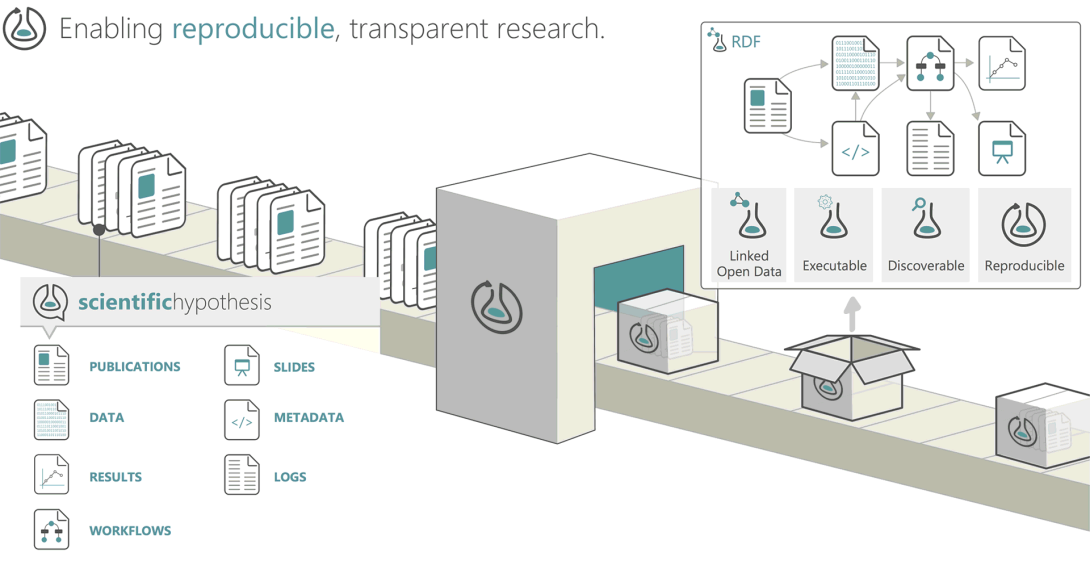
The FAIR initiative (“Findable, Accessible, Interoperable, Reusable”) aims to ensure that data objects are not only human-readable but also interpretable by machine agents. FDO provides exactly this capability. The FAIR Signposting approach already implemented in Dataverse, combined with our RO-Crate representation and extended schema/profile capabilities, positions ARP among the first systems worldwide to become FDO-compatible.
Given RO-Crate’s central role in ARP’s vision, SZTAKI DSD actively contributes to the work of the RO-Crate community and the development of its international specification. Balázs Pataki is also listed as an author on version 1.2.
Our developments—including the AROMA editor—have been presented within the community; AROMA is prominently featured on the RO-Crate community website, and a dedicated blog post reports on ARP’s achievements.
In 2026, we plan to take an active role in standardizing RO-Crate profiles—an area where ARP already has more hands-on experience than many international partners.
Image: https://www.researchobject.org/, License: Apache 2.0