One of the key missions of the Data Repository Platform is to preserve valuable research data stored on laptops, external storage devices, or even in drawers or other storage locations for future researchers.
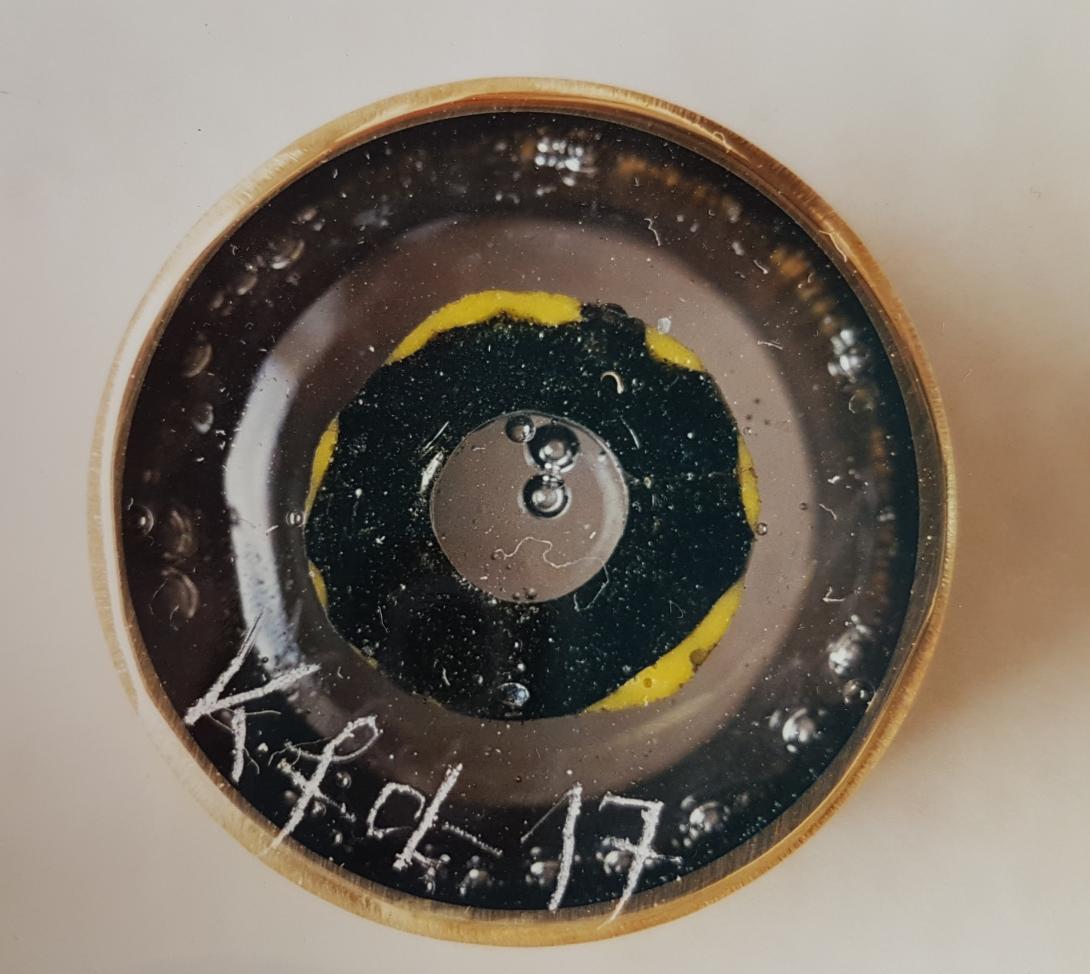
It was during such a preservation effort that a collection consisting of 111 images and related documentation - containing photographs and descriptive data of Avar-period beads - was added to the data repository. Until the opportunity offered by the ARP became available, the research material was accessible in the form of physical paper images and accompanying tables; now, however, it can be viewed and downloaded online at any time with just a few clicks, along with the related publications referenced in the ARP.
The dataset was created by István Hatvani (ARP Ambassador, Institute for Geological and Geochemical Research, HUN-REN Research Centre for Astronomy and Earth Sciences) with support from the ARP Ambassador Program 2023. Miklós Jakab (ELTE Center for Social Sciences) contributed to the preparatory work by digitizing the data, while Zoltán Tóth (HUN-REN SZTAKI) contributed by adding metadata to the dataset.

The study launched in 1995 by István Fórizs (Institute for Geological and Geochemical Research, HUN-REN Research Centre for Astronomy and Earth Sciences), which was based on data collected by archaeologist Adrien Pásztor, aimed to create a database suitable for identifying the raw materials and pigments used in the production of glass beads from the Early and Middle Avar periods.
By identifying the raw materials and pigments used during the period under study, the database can effectively aid in documenting potential temporal changes, exploring the international spatial and temporal distribution of identified manufacturing technologies, and mapping Avar-period trade routes, thereby providing useful information across multiple scientific disciplines. The artifacts collected during archaeological excavations originate from multiple sites, including Budakalász-Dunapart, Keszthely-Fenékpuszta-southern fortress wall, Szentendre, Tiszaföldvár-Téglagyár, and Szegvár-Szőlőkalja. Data collection and analysis required a truly interdisciplinary collaboration and the joint efforts of multiple research institutions.
As of December 2025, the “Monographic assessment of Avar Age glass beads” dataset has been downloaded more than 2,300 times, making it one of the most popular datasets.
The dataset also serves to support the findings of several publications; a data article was produced regarding the research data recently added to the data repository following publication:
- István Fórizs, István Gábor Hatvani, Géza Nagy, Zoltán Tóth, Adrien Pásztor (2024): Dataset of chemical composition of Avar age glass beads, https://doi.org/10.1016/j.dib.2024.110796
Availability of the data package:
Image sources: https://hdl.handle.net/21.15109/CONCORDA/2NIV5H/ZVPCES, https://hdl.handle.net/21.15109/CONCORDA/2NIV5H/ANNKOB, https://hdl.handle.net/21.15109/CONCORDA/2NIV5H/R02HDF, https://doi.org/10.1016/j.dib.2024.110796