Gyula Balla - Ambassador Program 2024, 2026
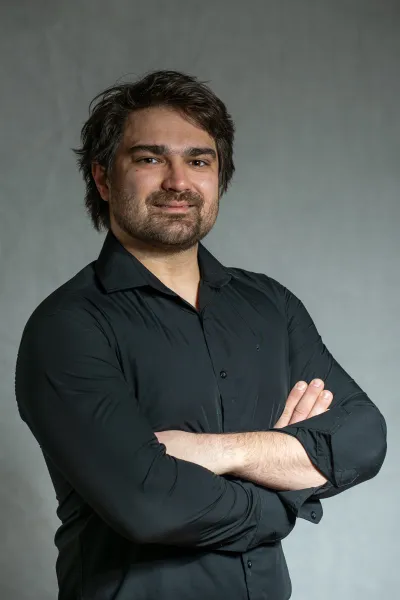
Gyula Balla is a researcher in the Translational Behavioral Neuroscience research group of the HUN-REN Institute of Experimental Medicine. He is involved in translational neuroscience research, which primarily aims to contribute to the understanding of the biological background of mental disorders with the help of animal experimental models, by identifying molecular mechanisms that could potentially be targeted for regulation in medicine in the future. The group's main research questions revolve around the identification of the long-term effects of early stressors and the pursuit of genetic factors influencing vulnerability and predisposition to disease. In his work, Gyula uses the toolkits of behavioral biology, molecular biology, anatomy, microscopy, and bioinformatics in data analysis.
In the 2024 Ambassador Program he worked on depositing data from a project investigating the brain basis of pathological fear generalisation, a characteristic symptom of post-traumatic stress disorder. Alongside this, he introduced the ARP services within his own institute. In 2026 he is working on depositing data from an animal model of oxygen deprivation at birth (perinatal asphyxia). He is preparing gene expression measurements from the prefrontal cortex as a complete data package: the results come together with a description of the experimental design, documentation of every processing step, and the analysis code itself. The aim is that other researchers should be able not only to view the data, but to reanalyse it.
A separate commitment is to publish results that showed no detectable difference. Such "negative" findings rarely appear in publications, even though they are part of the true picture of the field. These are accompanied by a detailed quality report showing how reliable each measurement is. He demonstrates data reuse in two directions. First, by analysing several experiments together and identifying the biological processes they share. Second, by comparing the patterns found in the animal model with results from human genetic studies. This work sits at the meeting point of neuroscience, bioinformatics and human genetics. He is also developing a metadata template for RNA sequencing data, and is testing ARP's own data package editor, RocKIT, feeding the results back to the ARP team. He presents his work in his research group and institute, and at disciplinary events.