Renáta Farkas
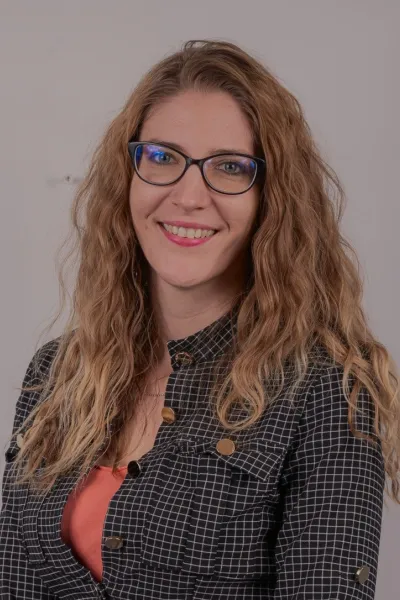
Renáta Farkas completed her studies at the University of Debrecen, Faculty of Informatics, where she earned a Bachelor's degree in Library and Information Science with a specialization in Web Programming. She subsequently obtained a Master's degree in Business Information Management from Eötvös Loránd University (ELTE).
Between 2014 and 2024, she worked at Széchenyi István University. Her responsibilities included research and educational support, higher education ranking analysis, the management and operation of the institutional repository, as well as the administration and technical support of the thesis submission platform. In addition, she headed the Collection Development and Processing Department and was actively involved in the fields of Open Science and Data Science. She also participated in international projects, contributing to content development, platform management, and the delivery of online international presentations. As part of her work, she organized and conducted workshops and information sessions for students, faculty members, and researchers in both Hungarian and English.
In the private sector, she worked with enterprise content management and document management software and also served as a consultant. She is interested in sustainability and actively participates in volunteer programmes.
In 2021, she received the Special Award of the Kovács Máté Foundation as part of the Young Librarian of the Year Award.
Since August 2021, she has been registered as a cultural expert in the field of academic and special libraries in the Cultural Experts Register.
She has been fulfilling the responsibilities of a Data Steward at the HUN-REN Wigner Research Centre for Physics in mid-April 2026. Her responsibilities include supporting and informing researchers on matters related to research data management and storage. She also promotes the institutional use of ORCID identifiers and contributes to maintaining up-to-date ROR identifiers. Her activities include conducting interviews with researchers to map research data assets and providing support in the preparation of Data Management Plans (DMPs).
“I consider it an outstanding goal to collaborate personally with researchers and research leaders, support for research data management, and facilitating the efficient flow of information. Furthermore, I ractivities as essential aspects of my workegard the harmonization of data storage practices, the promotion of data repository use, and educational and outreach sessions to be essential activities.
As a Data Steward, I find networking, collaborative brainstorming, and the exchange of experiences with fellow data stewards across the network particularly inspiring. I believe that personal communication with researchers, online and in-person consultations, as well as the organization and delivery of interactive information sessions and workshops effectively reflect the diversity of the data stewardship profession.”