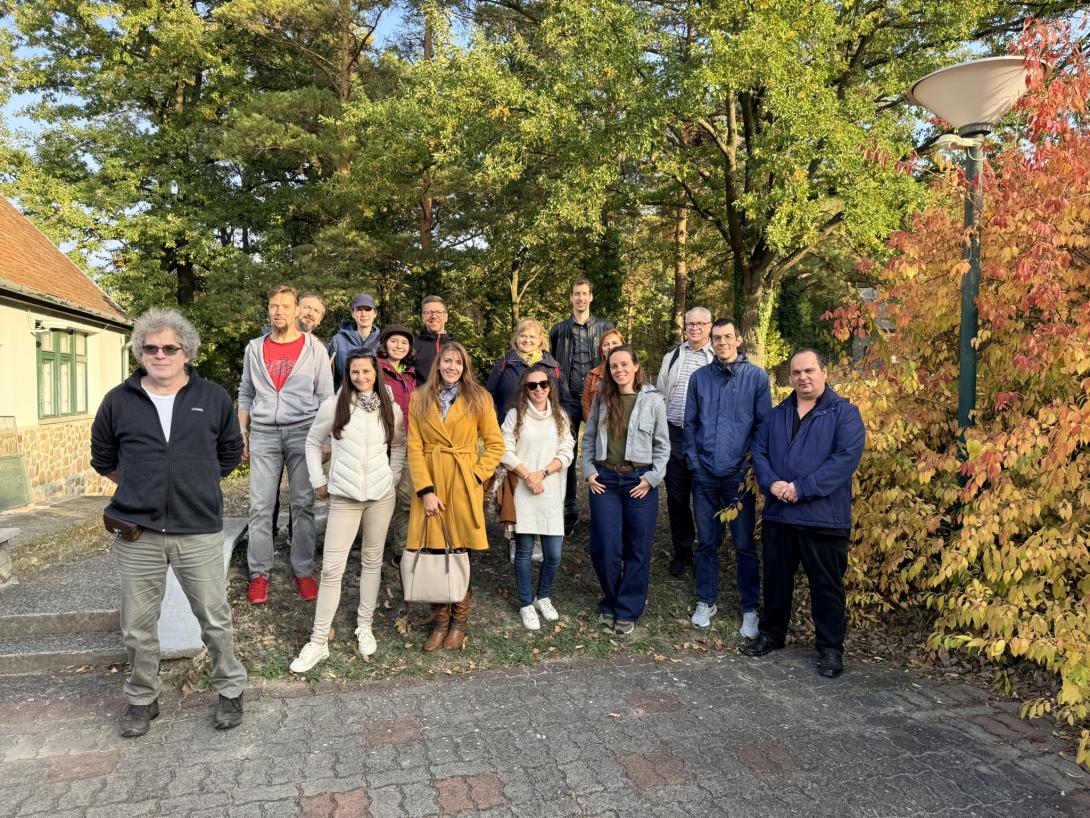
The research data stewards of HUN-REN and ELTE research institutes jointly form the HUN-REN Data Steward Network. The professionals are also active users and supporters of the ARP ecosystem. Members of the network participate in training and a mentoring programme, key elements of which include community building and getting to know one another’s institutions.
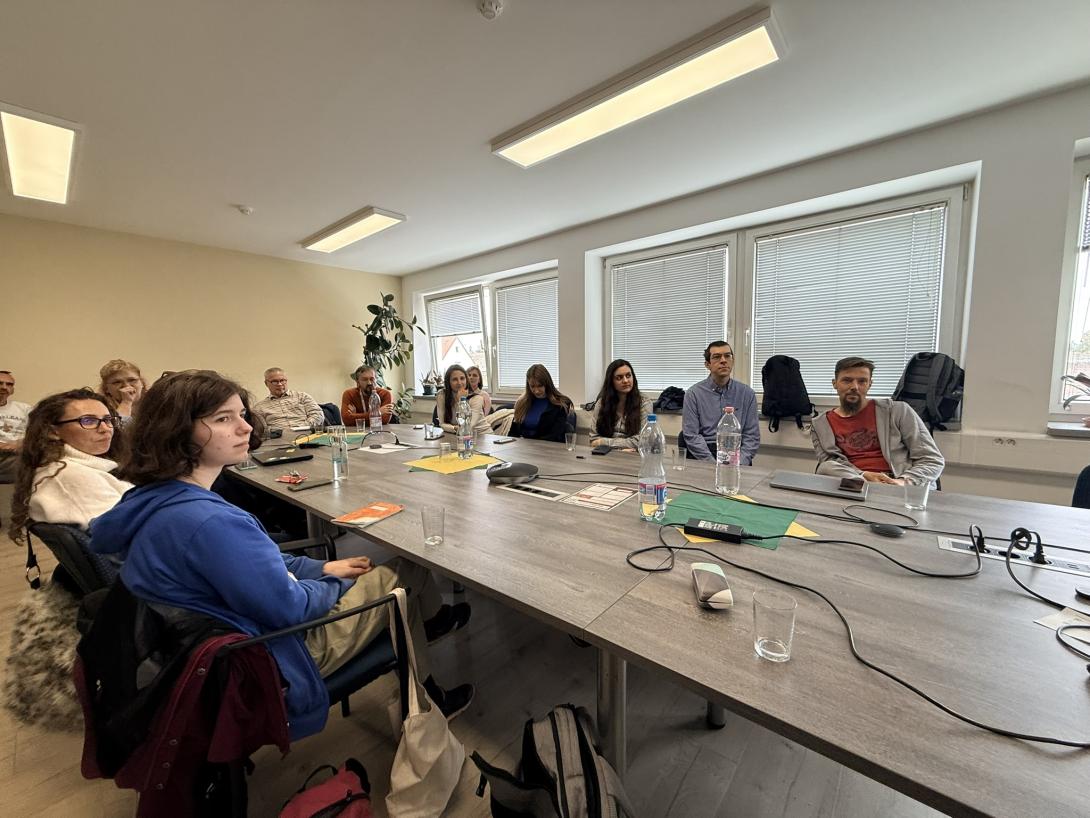
In October 2026, thanks to the efforts of Mátyás Hencz, institutional data steward, the HUN-REN Institute of Earth Physics and Space Science (FI) hosted the network members. During the full-day event, the data stewards attended a series of presentations and on-site demonstrations, gaining insights into the institute’s exciting projects and research activities.
In his opening remarks, István János Kovács, Director General, introduced the institute’s history and mission, its observatories located at several sites across Hungary, and its international network of collaborations. He also spoke about the Rybach Research Centre, established to bring together Hungarian researchers working in this field.
The audience then attended a presentation by Enikő Borbély, Research Assistant and PhD student, on the operation of tiltmeters in Hungary, as well as in Austria and Australia, their original purpose and potential further applications. She also discussed how rock tilt data are collected and analysed, the influence of tidal phenomena on tectonic plate movements, and the possibilities of determining earthquake epicentres.
István Bozsó, Research Fellow and AI Ambassador, spoke about the role and potential of large language models in FAIR research data management and data processing. He introduced the VibeARP service and discussed the importance of informing and educating researchers about data management, the availability of specific models, and the responsible use of artificial intelligence.
The morning presentations concluded with a talk by Mátyás Hencz, Research Fellow and Institutional Data Steward. His engaging presentation focused on rocks originating from deep underground and brought to the surface by volcanic activity, their composition, and the inclusions that preserve materials dating back millions of years, as well as the conclusions that can be drawn from their examination. He also discussed the subsidence and cooling of the lithosphere, as well as its thickening, caused by the continuous tectonic pressure exerted from the direction of Africa. These processes result in xenolith samples being brought to the surface from increasingly greater depths. Another topic was the geological accumulation of carbon dioxide in rocks. His presentation also covered the FI's xenolith collection, which has recently undergone an extensive inventory and currently contains more than 4,000 rock samples, as well as the preparatory work for the forthcoming online HUN-REN FI Rock Inventory.
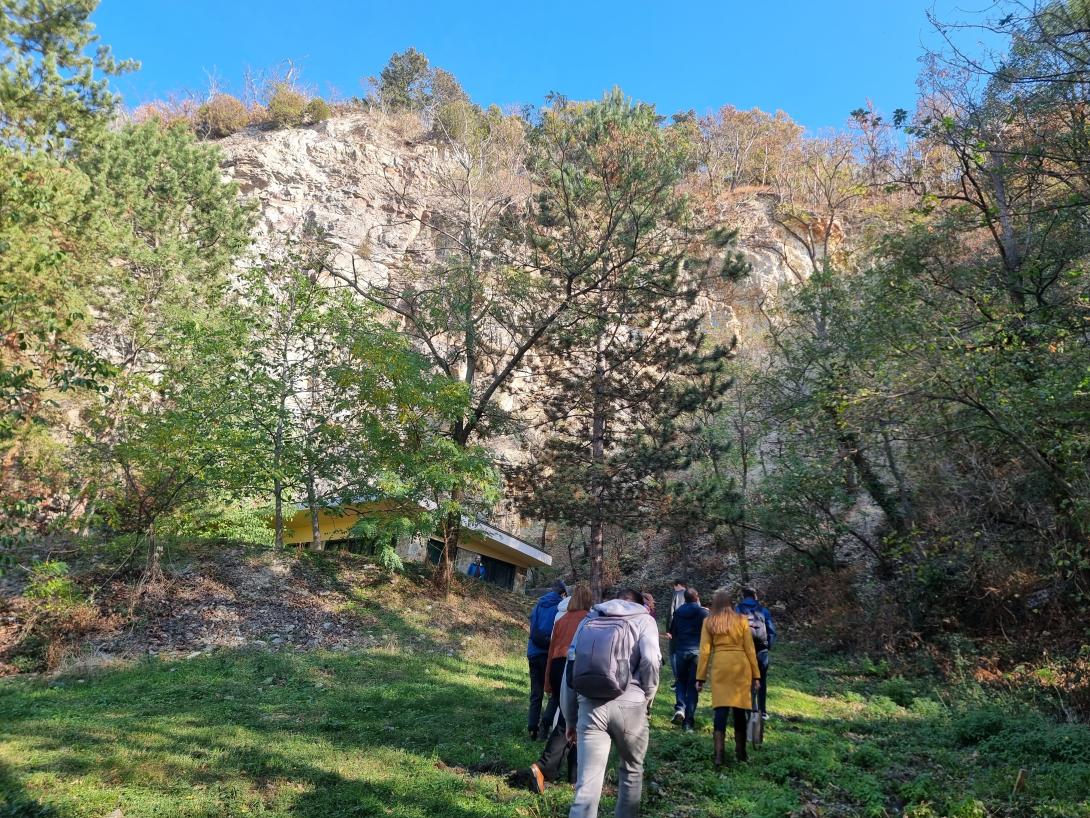
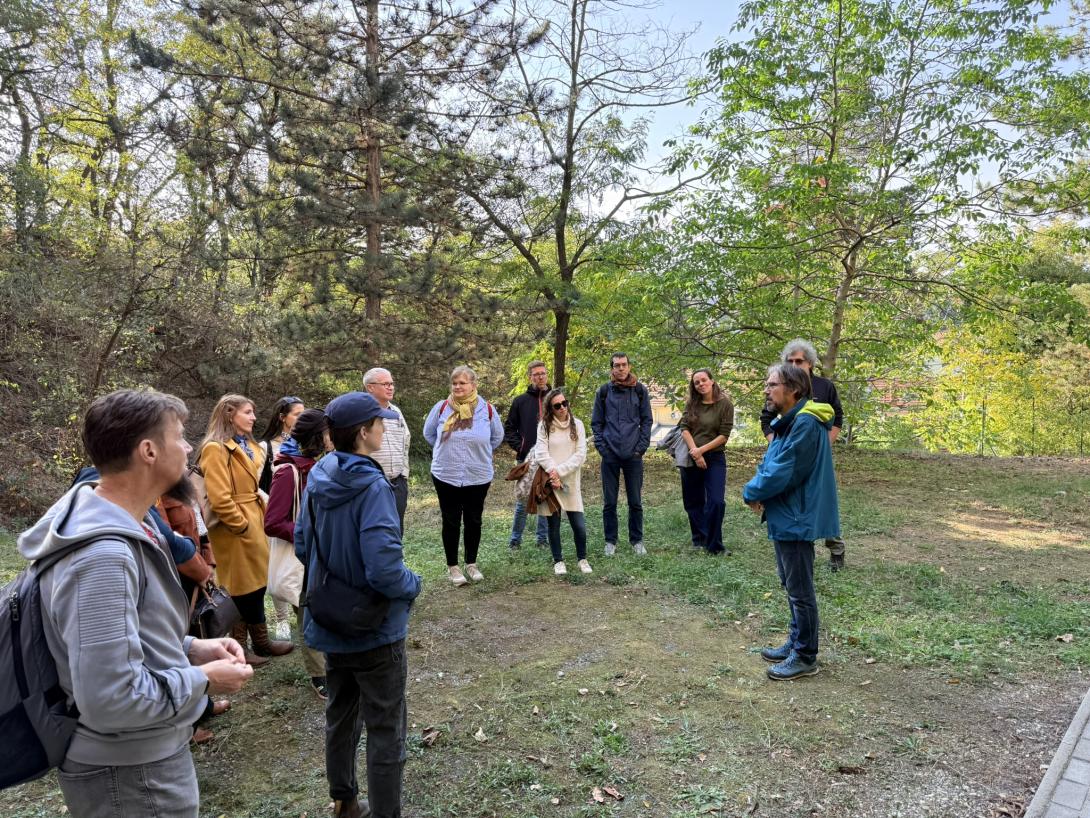
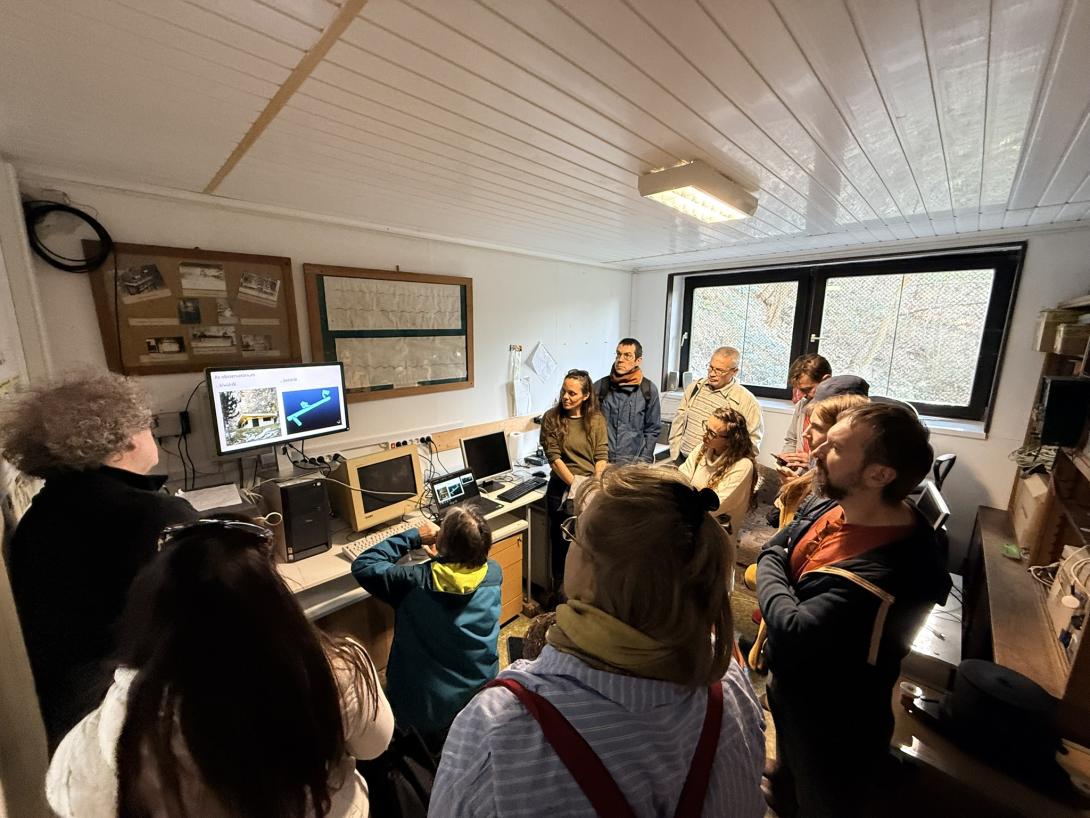
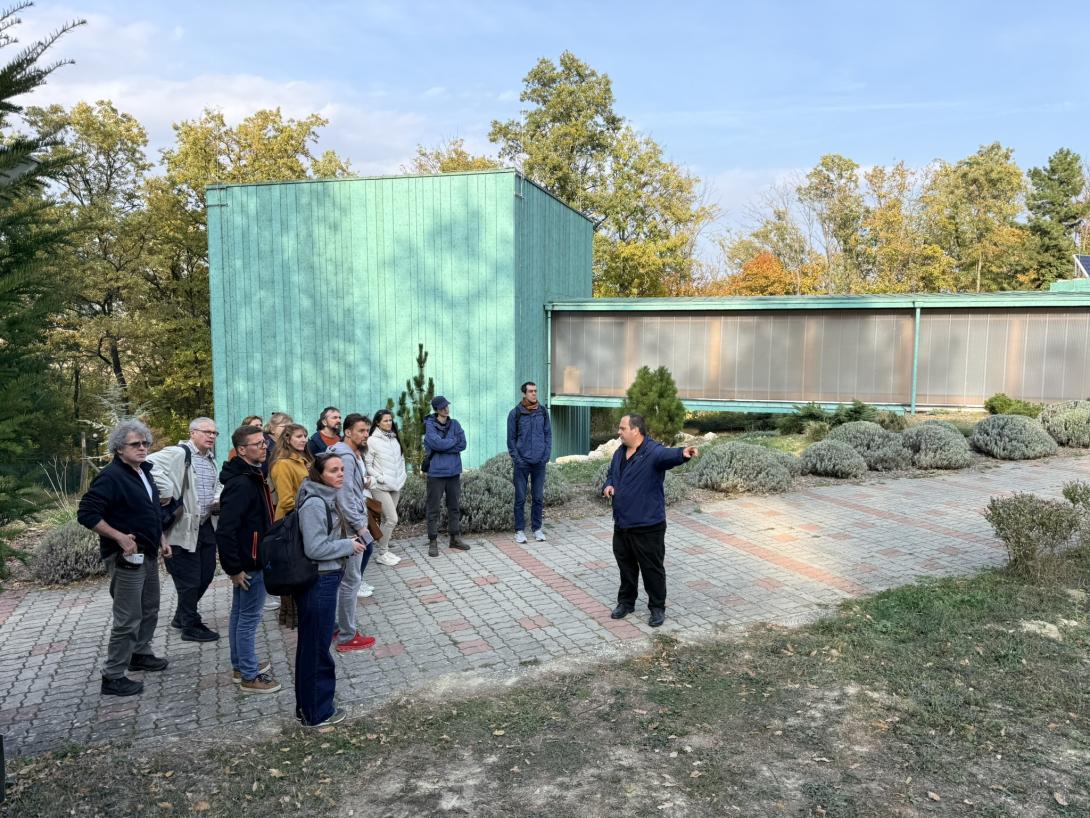
Following a shared lunch, the data steward team visited the institute’s site in Sopronbánfalva and the Geodynamic Observatory, which enables the monitoring of various geodynamic phenomena. Gábor Papp, Head of the Geodesy Research Unit, guided the participants around the site and introduced them to the 60-metre-high rock formation filled with radioactive gases, both from the outside (in person) and from the inside (using measurement data and recordings). Participants learned about the history of the rock formation and the use of the tunnel excavated into it in 1962, a gift from miners working in the Oroszlány coal mines in support of scientific research. They also learned about the observation opportunities offered by the tunnel, including the monitoring of tidal phenomena and the continuous movement of tectonic plates, as well as the findings obtained and the measurement values recorded every second and their subsequent use.
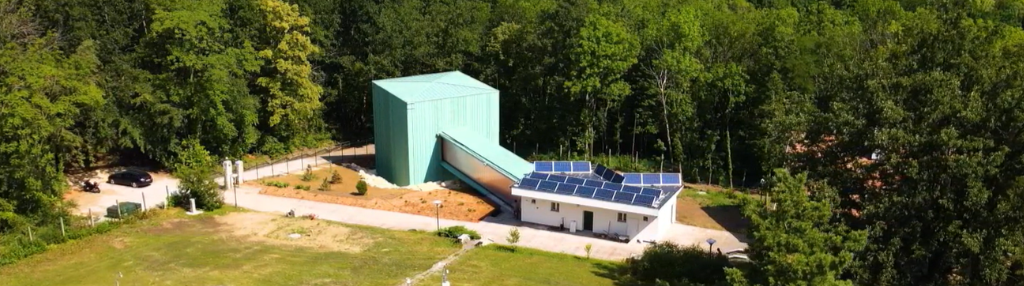
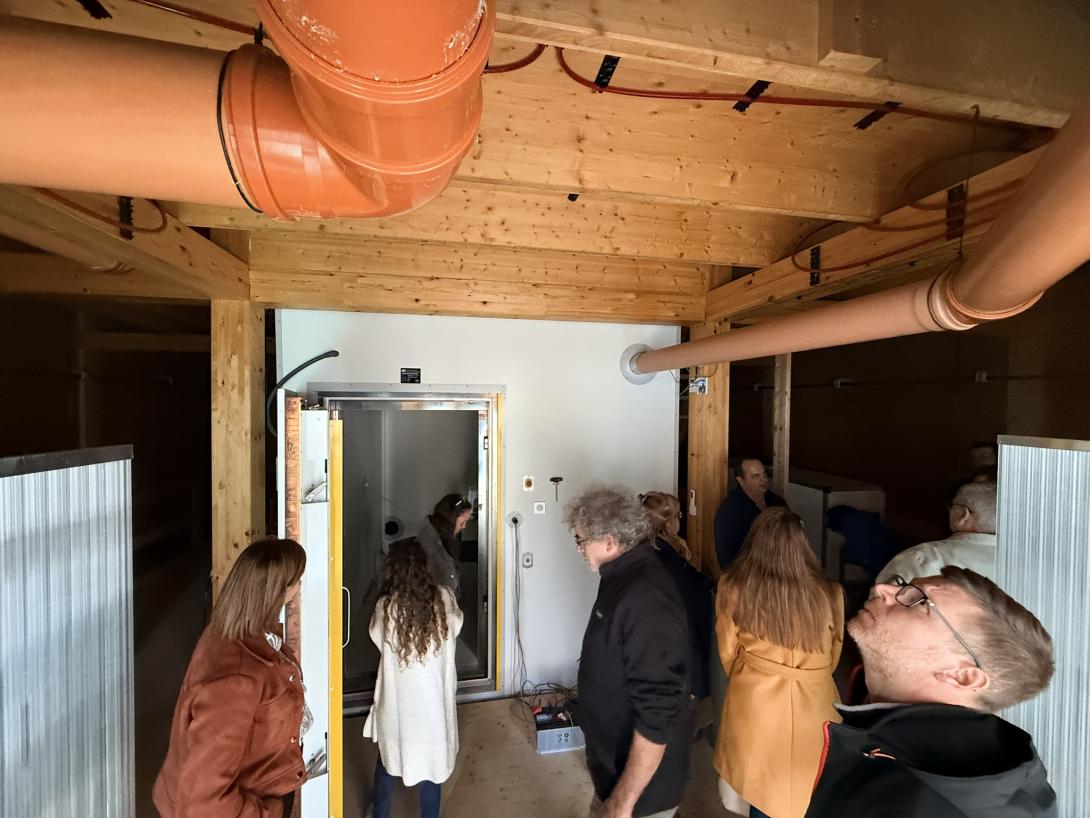
The team concluded the day at the FI's newly constructed and recently inaugurated Magnetic Zero-Field Laboratory in Fertőboz. István János Kovács explained the purpose and function of this unique facility, outlining the process from the initial idea to its realisation, the construction itself, and the challenges involved in its development. The room-sized geomagnetic observatory functions as a zero-magnetic-field laboratory, and its size and capabilities are unique in Central Europe. This new Hungarian research infrastructure offers researchers at the FI, across the HUN-REN network, throughout Hungary and beyond its borders the opportunity to conduct experiments in extremely low magnetic fields. It provides a setting for space physics and materials science experiments that cannot be carried out under normal terrestrial conditions. Further information about the laboratory is available, among other sources, on the project website and in the July–August 2026 issue (7–8) of Fizikai Szemle.
On behalf of the Data Steward Network, we would like to express our sincere thanks for this exceptionally informative and exciting day, for the researchers’ time and dedication, and for the opportunity to gain insight into this fascinating field of science, which explores and seeks to understand the world around us and beneath our feet!
Anyone interested can find fascinating measurements, information, graphs, illustrations and excerpts from articles about the institute’s work here: http://kepujsag.ggki.hu/
Thumbnail image: From the Magnetic Zero-Field Laboratory project website
Photos: Júlia Egyed-Gergely (ELTE Centre for Social Sciences), Mátyás Hencz (HUN-REN FI)